Why Words Matter More Than We Think
In martial arts training, people often focus on physical strength. Kicks, punches, speed, and power all play an important role. But words matter just as much. The words students hear from instructors, teammates, and even themselves shape their confidence, effort, and willingness to keep going when things get hard.
Words shape how someone feels, how they see themselves, and whether they keep going or give up. A single sentence can build confidence or break it down. This is especially true for children, who are constantly learning how to interpret the world around them.
In every class, students face moments of challenge. A difficult technique. A mistake. A moment of frustration. What is said in that moment can either push them forward or hold them back. A simple “keep going” can build belief, while a quick negative comment can create doubt. Over time, those repeated messages become a student’s inner voice.
At FMAC, students are learning more than how to defend themselves physically. They are learning how to communicate, support others, and become leaders through the words they choose. Because in the end, the way a student speaks to others and to themselves plays a major role in the kind of person they become.
The Power of Words in the Moments That Matter
Think about a moment when someone said something encouraging. It may have been simple, something like “you’ve got this” or “keep going,” but it made a difference. Now think about the opposite. A negative comment, even said quickly, can stay with someone much longer than we expect.
Words are powerful because they influence belief. This is especially true for children. After a tough class or a disappointing performance, they replay what went wrong, question themselves, and wonder if they are good enough. What they hear in that moment matters.
A response like, “You need to focus more. That shouldn’t have happened,” may come from a place of care, but it can reinforce pressure and doubt. On the other hand, “I know that was tough. I’m proud of you for pushing through. Let’s keep working on it,” builds resilience and belief.
As adults, we often focus on what we mean to say, but kids focus on what they feel when they hear it. A child does not always hear “you need to improve.” They often hear “I’m not good enough.” That is why tone matters just as much as the words themselves.
Encouragement does not mean ignoring mistakes. It means guiding a child through those moments in a way that keeps their confidence intact and helps them understand that struggle is part of growth. This is how confidence is built, not all at once, but one interaction at a time.
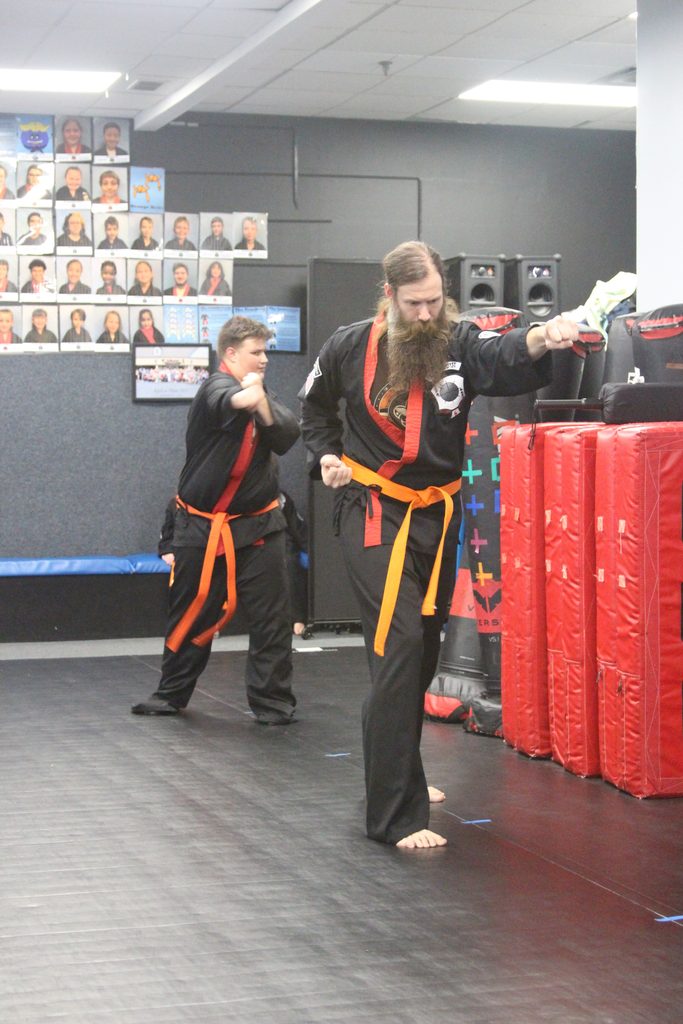
At FMAC, instructors create an environment where students feel safe to try, fail, and try again. When that same message is reinforced at home, it becomes even more powerful.
Everyday Choices Inside the Studio
That same idea comes to life in every class. Every day, students are given opportunities to choose how they use their words.
When a classmate is having a hard time, they can ignore it, criticize it, or step in and help. When training gets difficult, they can complain or encourage each other to keep trying. These small moments are where character is developed.
Instructors guide this process by modeling positive communication and reinforcing supportive behavior. Students learn that strength isn’t about being the best in the room. It is about helping others grow alongside you.
Over time, this creates a culture where students feel safe to try, fail, and try again, leading to real progress in both skill and confidence.
Building Leaders, Not Just Students
Leadership is not about being in charge. It is about influence.
Students who learn to use their words positively become leaders because people are naturally drawn to those who make them feel supported and capable. They learn to lift others up instead of putting them down.
This carries beyond the studio.
At school, these students are more likely to encourage classmates instead of joining in negativity. At home, they communicate more respectfully and thoughtfully. In everyday life, they begin to understand that their words have impact.
That awareness is what separates good students from strong leaders.
Strength on the Inside
Martial arts build strength on the outside through discipline, repetition, and physical training. But true growth happens when that strength matches what’s inside.
Character is built through small, consistent choices.
Choosing patience when frustrated
Choosing encouragement when it is easier to stay silent
Choosing respect even in difficult moments
These choices shape who a student becomes over time.
Want to learn more? You can listen to Dr. Len’s lecture about The Power of Words on YouTube https://youtu.be/Y5VBGAYbBc4?si=oY_n28LWi5dO_MsS
Final Thought
At FMAC, every class is an opportunity to grow, not just physically, but personally.
Students learn that their words matter. They learn they can positively influence others. Most importantly, they learn that real strength isn’t just about what you can do, but how you treat the people around you.
Because in the end, character starts with the words we choose.