When most people think about martial arts, they picture high kicks, fast punches, and impressive moves. And while those skills are exciting to watch, they’re not the most important thing students learn in class. The real difference, the thing that sets martial arts apart, is control. Here at FMAC, it’s really about building self-control from the very first class.
At Family Martial Arts Center, self-control is one of the first lessons students begin to develop. From their very first class, kids aren’t just learning how to move. They’re learning when to stop, when to listen, and how to stay calm in challenging or unfamiliar situations.
That might not sound flashy, but it’s one of the most valuable life skills a child can build.
Why Self-Control Is an Important Skill
More Than Just Physical Training
Martial arts may look physical on the surface, but the real training goes much deeper. Every class is designed to build awareness, discipline, and control.
Anyone can throw a punch or swing their arms around. But learning to control those movements takes focus, patience, and discipline. In martial arts, that control isn’t optional. It’s what keeps everyone safe.
Students quickly learn that technique alone isn’t enough. A strong punch means very little if it can’t be stopped. A fast movement isn’t impressive if it lacks focus. Without control, even simple movements can lead to mistakes or injury.
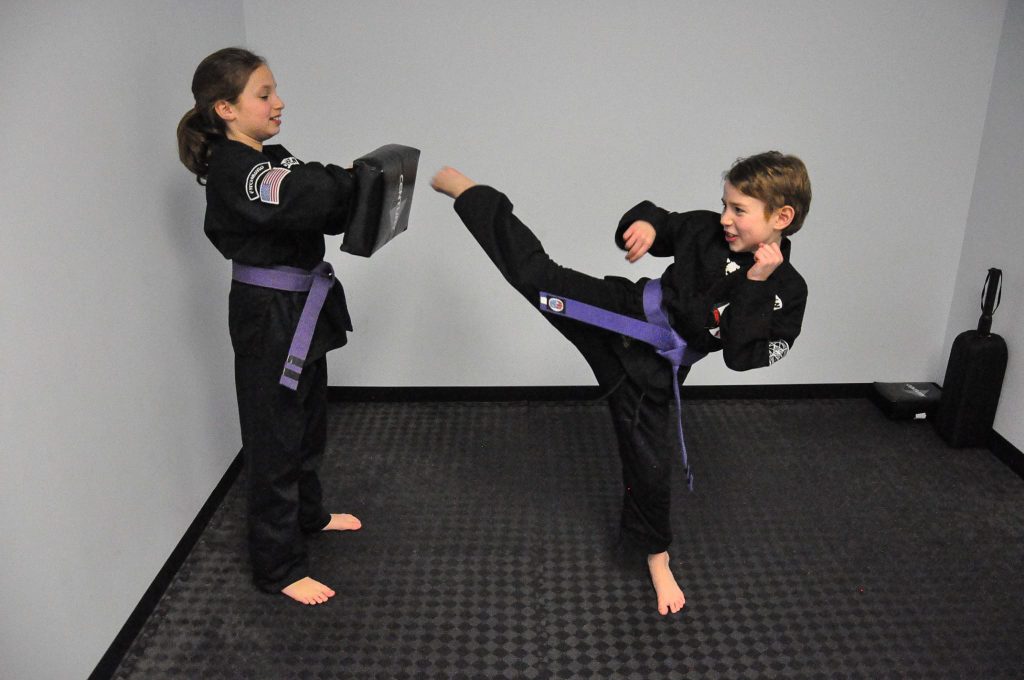
That’s why in class, students practice stopping their punches just inches from a target. They learn to hold their stance, even when their muscles get tired. They respond to instructions quickly and with purpose.
These small moments matter.
Every time a student stops on command instead of following through, they’re building awareness. They’re learning that they are in control of their bodies, and that control protects both themselves and their training partners.
Building Focus, Patience, and Awareness
Self-control helps kids slow down and pay attention. Instead of rushing through movements, they begin to think about what they’re doing and how they’re doing it.
Over time, this builds patience and strengthens their ability to stay focused, even when distractions are present. They become more aware of their actions, their surroundings, and the people around them.
That awareness doesn’t stay in class.
It carries into school, at home, and in everyday situations where focus, patience, and good decision-making matter most.
How Martial Arts Teaches Self-Control
Learning When to Stop
One of the first lessons students practice is stopping on command. Whether it’s a punch or a kick, they learn to control their movement and stop at the right moment.
This isn’t just about technique. It’s about awareness and safety.
In martial arts, students often work with partners. That means every movement must be controlled. Stopping at the right moment protects both the student and the person they’re training with.
Over time, students begin to understand that they are fully in control of their actions, and that control is what allows them to train with confidence.
Learning When to Listen
In every class, students are expected to listen carefully and follow instructions. This isn’t just about being quiet. It’s about being present and aware of what’s happening around them.
In a fast-paced class environment, missing an instruction can lead to confusion or mistakes. That’s why students learn to focus, watch closely, and respond with intention.
As they improve, they begin to understand that listening is part of control. It helps them move at the right time, make better decisions, and stay in sync with their instructor and training partners.
Self-Control is Staying Calm Under Pressure
Not everything comes easily at first. Some techniques take time, and mistakes are part of the process.
In those moments, students are encouraged to pause, reset, and try again instead of reacting with frustration. They learn to take a breath, stay focused, and keep control of their actions.
This ability to stay calm under pressure is what turns challenges into progress.
And over time, it becomes a habit. Not just in class, but in everyday situations where staying calm and thinking clearly makes all the difference.
The Difference Between Reacting and Responding
Why Reactions Can Lead to Poor Choices
Reacting is fast, emotional, and often unplanned. It happens in the moment, without thinking.
For kids, this can show up as frustration, impatience, or impulsive behavior. They might act before they understand the situation or make choices they later regret.
Without self-control, reactions take over.
Respond with Confidence: Required Self-Control
Responding is different. It requires control.
In martial arts, students practice this every day. They learn to pause, listen, and act with intention instead of rushing into movement. They wait for instruction, adjust when needed, and stay focused on what they’re doing.
That pause, even if it’s just a moment, makes a big difference.
It allows them to think clearly, make better decisions, and stay in control of their actions.
Over time, this becomes a habit. Not just in class, but in everyday situations where staying calm and choosing how to respond leads to better outcomes.
How Self-Control Improves Behavior at Home and School
Better Focus in the Classroom
As students build self-control, their ability to focus improves. Teachers often notice that kids who train in martial arts are more attentive and better able to follow directions.
Improved Listening and Respect
Learning to listen in class carries over into daily life. Kids become more respectful, more aware of others, and more thoughtful in how they communicate.
Making Smarter Choices
With stronger self-control, children begin to think before they act. This leads to better choices, fewer impulsive decisions, and more positive outcomes.
Building Focus, Confidence, and Leadership
How Discipline Builds Confidence
Confidence doesn’t come from doing everything perfectly. It comes from learning, improving, and staying consistent.
As kids develop discipline, they begin to trust themselves. They see their progress and gain confidence in their abilities.
Why Self-Controlled Kids Become Strong Leaders
Leadership starts with self-control. Kids who can manage their actions and reactions are better equipped to guide others.
In class, this often shows up when older students help younger ones, offer encouragement, and lead by example.
Why Parents Choose Martial Arts for Character Development
A Structured, Positive Environment
Martial arts classes provide a clear structure where expectations are consistent and positive behavior is reinforced.
Students know what’s expected of them. They learn to follow directions, stay focused, and take responsibility for their actions.
At the same time, the environment is supportive. Students are encouraged to improve, not to be perfect. They learn through practice, repetition, and steady progress.
That balance helps kids grow with confidence while building accountability.
Life Skills That Go Beyond the Mat
The lessons learned in martial arts don’t stay in class.
Self-control, focus, and discipline begin to show up in school, at home, and in everyday situations. Kids become more aware of their actions, more thoughtful in their choices, and more confident in how they handle challenges.
These are not short-term skills. They are habits that stay with them as they grow.
Try a Martial Arts Class and See the Difference
If you’re looking for a way to help your child build focus, confidence, and self-control, martial arts is a powerful place to start.
At Family Martial Arts Center, the goal is not just to teach technique. It’s to help kids develop the mindset, habits, and character that will serve them for life.
Come see a class in action and experience the difference for yourself.